

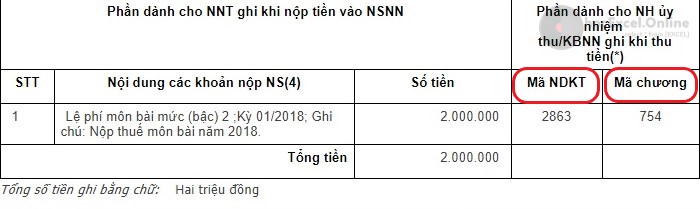
For developers working on Fintech solutions, ERP systems (Enterprise Resource Planning), or accounting software localization for the Vietnam market, understanding the State Budget Classification (Mục lục Ngân sách Nhà nước) is non-negotiable.
This comprehensive guide breaks down the essential NDKT codes—from tax revenues to public expenditures. Whether you are building a payroll system, a digital invoicing platform (e-invoice), or analyzing government open data, this structured reference serves as the backbone for accurate financial data processing in Vietnam.
1. Revenue Classification: The Input Layer
For software dealing with tax declaration (e-Tax) and revenue recognition, the Group 0110 is the most critical dataset. It defines how money enters the state budget through taxes, fees, and charges.
Personal Income Tax (PIT) – Section 1000
If you are developing Payroll or HRM (Human Resource Management) software, these “Sub-items” (Tiểu mục) must be mapped correctly to employee salary deductions.
| Sub-item (Tiểu mục) | Description | Tech Application |
|---|---|---|
| 1001 | PIT from wages and salaries | Default code for standard payroll modules. |
| 1003 | PIT from business production/business | For gig-economy platforms/freelancers. |
| 1004 | PIT from capital investment | Fintech investment apps (Stock/Crypto). |
| 1005 | PIT from capital transfer | M&A and equity management software. |
| 1015 | PIT from securities transfer | Stock trading platform integration. |
Corporate Income Tax (CIT) – Section 1050
Essential for Accounting and ERP finance modules.
| Sub-item | Description |
|---|---|
| 1052 | CIT from production and business activities |
| 1053 | CIT from real estate transfers |
| 1055 | CIT from capital transfers |
Consumption & Import Taxes – Section 1700 & 1900
Crucial for POS (Point of Sale), E-commerce, and Logistics/Customs software.
- 1701: Value Added Tax (VAT) on domestic goods (The most common code in e-invoices).
- 1702: VAT on imported goods.
- 1901: Import duties.
- 2000 Series: Environmental Protection Tax (Vital for energy and manufacturing sectors).
2. Specialized Fees: IT & Telecommunications
For the tech sector specifically, Group 2350 (Information and Communications) contains the codes relevant to ISPs, SaaS providers, and Media companies.
- 2351: Radio frequency usage fees.
- 2352: Internet domain name and address maintenance fees (VNNIC related).
- 2353: Telecommunication number/code usage fees.
- 2367: Fees for conformity certification of information security.
- 2366: Appraisal fees for online game scripts (GameDev compliance).
Tech Note: If your platform handles domain registration or provides telecom services, these are the exact line items for your regulatory compliance reporting.
3. Expenditure Classification: The Output Layer
When building software for Public Sector Accounting or B2G (Business to Government) procurement portals, understanding where the money goes is key.
Human Resources & Operations – Group 0500
Used for government internal management systems.
- 6001: Basic salaries (rank/grade based).
- 6051: Wages for contractual labor.
- 6100 Series: Various allowances (Area, Hazard, Responsibility).
- 6301-6304: Social insurance, Health insurance, and Unemployment insurance contributions.
Technology Procurement & Maintenance – Section 6950 & 7050
This is the most important section for IT vendors selling to the government. Your invoices must align with these budget codes to ensure payment processing by the State Treasury.
| Sub-item | Description | Usage Context |
|---|---|---|
| 6956 | Procurement of IT equipment | Buying servers, laptops, networking gear. |
| 6551 | Stationery | Basic office supplies. |
| 6605 | Internet & Cable TV charges | Monthly operational costs. |
| 7053 | Purchase/Maintenance of IT Software | SaaS subscriptions or annual maintenance contracts. |
| 7054 | Development of IT Software | Custom outsourcing projects. |
4. Digital Asset & Intellectual Property Codes
As the digital economy grows, the classification for intangible assets (Group 0115 & 0200) becomes increasingly relevant for LegalTech and IP Management systems.
- 3405: Revenue from patents and inventions.
- 3406: Revenue from copyrights and trademarks.
- 2504: Intellectual property fees (Section 2500 – Science & Technology).
5. Implementation Guide for Developers
Database Schema Suggestion
When designing your database to store these codes, avoid hardcoding them as enums. The list changes annually.
CREATE TABLE budget_classification (
    id SERIAL PRIMARY KEY,
    code VARCHAR(10) NOT NULL, -- e.g., '1001', '1701'
    parent_group_id INT, -- To link '1001' to '1000'
    description_vi TEXT NOT NULL,
    description_en TEXT,
    is_active BOOLEAN DEFAULT TRUE,
    category ENUM('REVENUE', 'EXPENDITURE', 'FEE', 'OTHER')
);
API Integration Logic
- Validation: Ensure user input for “Tax Code” validates against the active list in
Section 1000orSection 1700. - Mapping: In e-invoice generation (XML format for General Department of Taxation), the
<ItemCode>often correlates with internal SKU codes, but the accounting entry must map back to these NDKT codes for financial reporting. - Search: Implement ElasticSearch or fuzzy search for the
Descriptionfields, as users often search by “Tiền lương” (Salary) rather than “1001”.
6. Conclusion
The Vietnam State Budget Classification is more than just a list of numbers; it is the operating system of the nation’s finance. For tech professionals in the fintech, ERP, and government-tech space, mastering these codes is essential for building compliant, robust, and localized software solutions.
By integrating these codes accurately into your data structures, you ensure that your software not only functions technically but also adheres strictly to Vietnamese financial regulations (VAS/VFRS).
Reference: Ministry of Finance, Vietnam & State Treasury Regulations.









Discussion about this post