Dealing with content that exceeds the default display limits of a cell is a frequent frustration for Microsoft Excel users. When text gets cut off or numbers appear as hash marks (#####), it disrupts data readability and presentation. While many beginners resort to the “Merge & Center” tool to fix this, experienced users know that merging cells can severely hinder data sorting and filtering later on. A far superior solution is to master the art of adjusting column width and row height. This guide provides a comprehensive walkthrough on how to precisely resize your spreadsheet elements in Excel 2010, 2013, and 2016 using the Format tools and AutoFit features.
The Problem: Data Display Issues
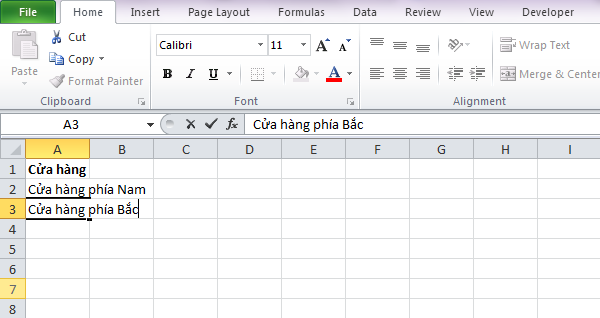
Before diving into the solution, it is important to identify the issue. Often, when you input a long string of text into a cell, it may overlap into the next cell if it is empty, or be truncated visually if the adjacent cell contains data. This makes the spreadsheet look unprofessional and difficult to review.
Excel spreadsheet showing text content cut off in cell A1 due to insufficient column width
Instead of merging cells, which alters the structure of your grid, the standard practice in professional data management is to adjust the dimensions of the rows and columns to accommodate the content.
Step-by-Step Guide to Resizing via the Ribbon
The most precise way to adjust your layout is through the specific formatting tools located in the Excel Ribbon. This method ensures consistency across your document.
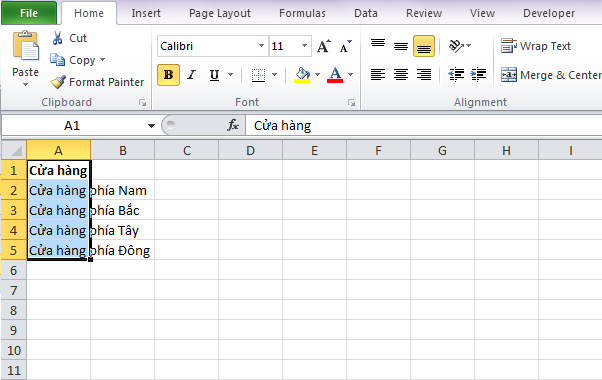
Step 1: Select the Target Area
Begin by highlighting the specific cell, column, or row that requires adjustment. You can click the column letter (e.g., Column A) or the row number on the margins to select the entire strip.
User selecting column A in the Excel interface to prepare for resizing
Step 2: Access the Format Menu
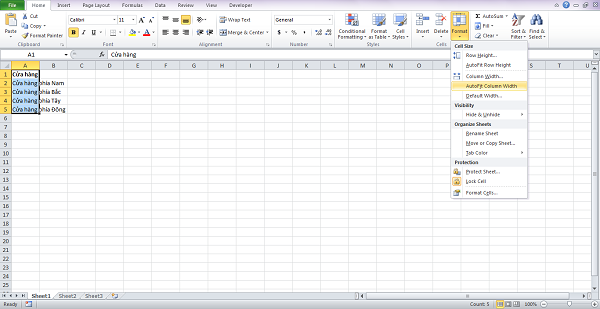
Navigate to the Home tab on the top Ribbon. Look for the Cells group (usually located towards the right side of the toolbar) and click on Format.
Excel Home tab showing the Format dropdown menu expanded within the Cells group
Upon clicking Format, you will be presented with a dropdown menu containing five critical options for cell sizing:
- Row Height: Allows you to manually input a specific point value for the height of the selected row.
- AutoFit Row Height: Automatically adjusts the height of the row to match the tallest font or content within that row.
- Column Width: Allows you to manually input a specific value for the width of the selected column.
- AutoFit Column Width: Instantly expands or shrinks the column width to fit the longest string of text or number contained within it.
- Default Width: Sets a standard width for columns in the worksheet or workbook.
Practical Application: Using AutoFit Column Width
For most users, the AutoFit feature is the most efficient tool. It eliminates the guesswork of trying to determine the exact pixel width required for your data. In this example, we will use the AutoFit Column Width command to fix the truncated text shown in the previous section.
With your column selected, return to the Format menu and click on AutoFit Column Width.
Cursor highlighting the AutoFit Column Width option in the Excel Format menu
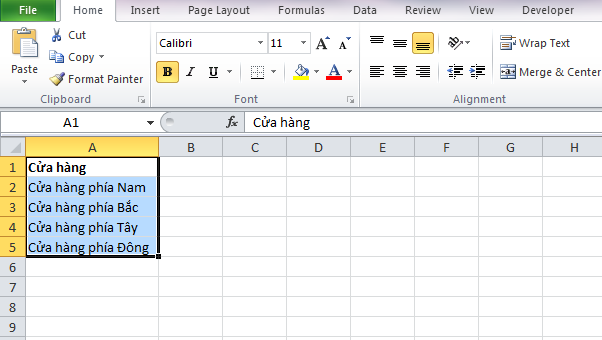
Once applied, Excel immediately calculates the space needed for the longest entry in the column and snaps the border to the perfect width.
Excel spreadsheet displaying fully visible text in column A after applying AutoFit adjustment
As you can see, the content is now fully visible, and the structural integrity of the individual cells remains intact, allowing for future sorting and filtering operations without error.
Alternative Method: Manual Dragging
For quick, on-the-fly adjustments where precision is less critical, you can also use the manual drag method:
- Hover your mouse cursor over the dividing line between two column headers (e.g., between A and B) or two row numbers.
- The cursor will change into a double-headed arrow with a perpendicular bar.
- Click and drag to resize manually, or double-click the border to instantly trigger the AutoFit function for that specific row or column.
Conclusion
Mastering the column and row formatting tools in Excel 2010, 2013, and 2016 is a fundamental skill for creating clean, professional spreadsheets. By utilizing Format and AutoFit instead of merging cells, you ensure that your data remains readable and technically sound for processing. Whether you choose the precision of the Ribbon menu or the speed of the double-click shortcut, these techniques will significantly improve your workflow and data presentation.
References
- Microsoft Support: Change the column width and row height in Excel
- Excel Easy: Row Height & Column Width
- GCFGlobal: Excel 2016 – Modifying Columns, Rows, and Cells


Discussion about this post