
Visualizing a company’s structure or a project team’s hierarchy is a common task for interns, HR professionals, and project managers. While drawing shapes manually using lines and boxes is possible, it is often time-consuming, tedious, and difficult to align perfectly. Fortunately, Microsoft Word offers a powerful, built-in feature called SmartArt that streamlines this process.
SmartArt allows users to create dynamic, professional-grade diagrams that automatically adjust as you add or remove personnel. This guide provides a deep dive into using SmartArt to build an organizational chart (org chart) efficiently, ensuring your documentation looks polished and remains easy to edit.
Step 1: Initializing the SmartArt Graphic
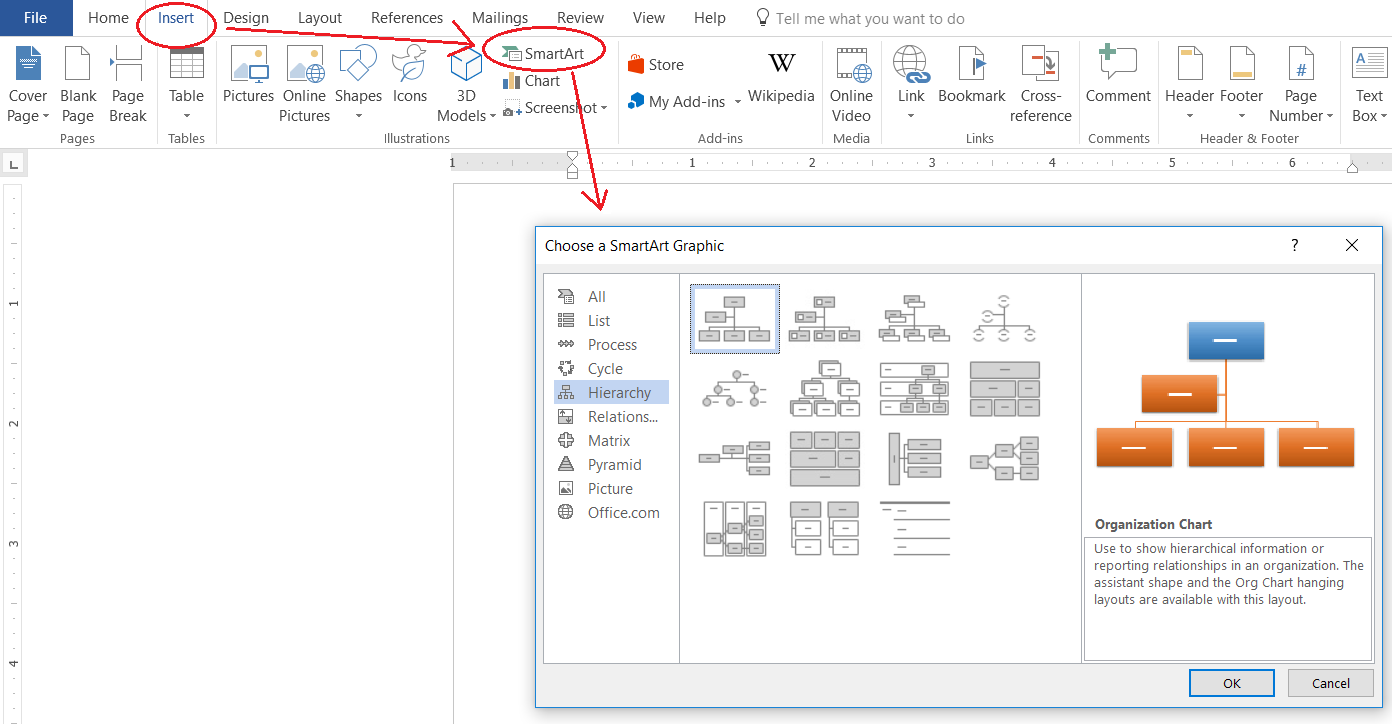
To begin, open your Microsoft Word document. Navigate to the Insert tab on the Ribbon. Locate the Illustrations group and click on the SmartArt button. This opens the “Choose a SmartArt Graphic” gallery, which categorizes diagrams by their function (List, Process, Cycle, etc.).
For an organizational chart, select the Hierarchy category on the left sidebar. You will see several layout options; the first option, “Organization Chart,” is the most standard and versatile choice. Select it and click OK to insert the template into your document.
SmartArt selection window in Microsoft Word highlighting the Hierarchy category
Step 2: Customizing Typography and Basic Formatting
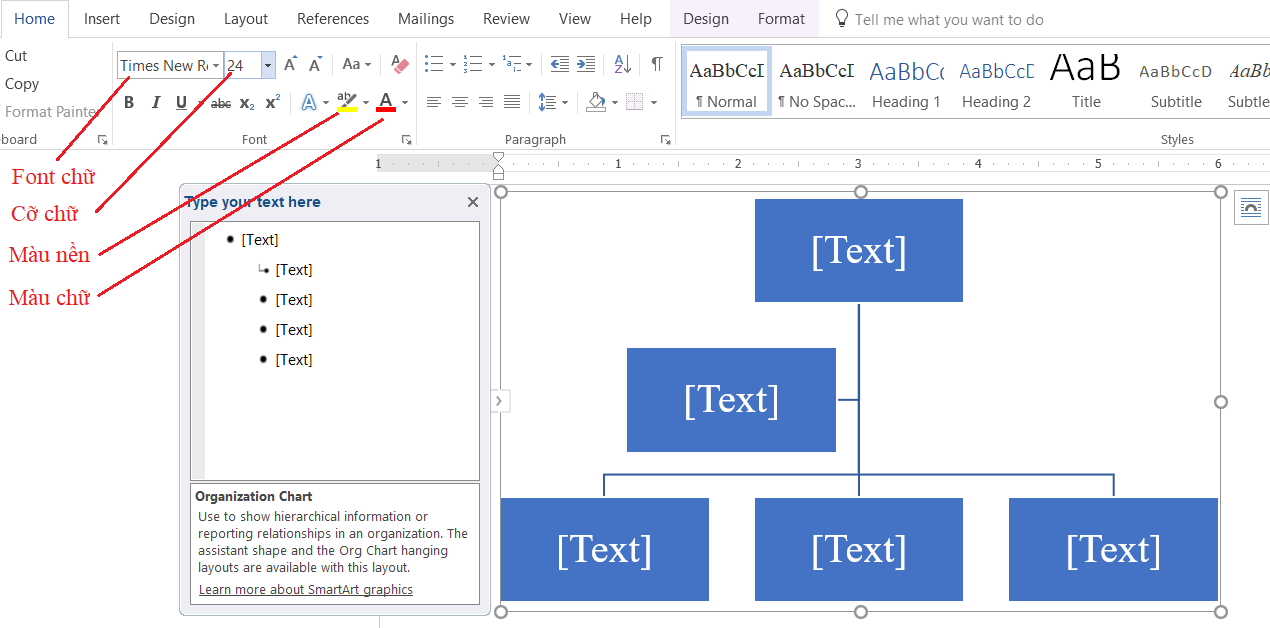
Once the graphic is inserted, you can immediately start defining the visual style. While SmartArt handles the layout, the Home tab controls the typography. You can select the entire SmartArt object or specific nodes (boxes) to change the font family, font size, text color, or boldness.
Differentiating departments by font color or style can improve readability. For example, you might use bold, larger text for managerial positions and standard weight for staff roles. This step ensures that your chart aligns with your company’s branding guidelines before you start populating it with data.
Editing font styles and colors for the org chart via the Home tab
Step 3: Inputting Data and Defining Roles
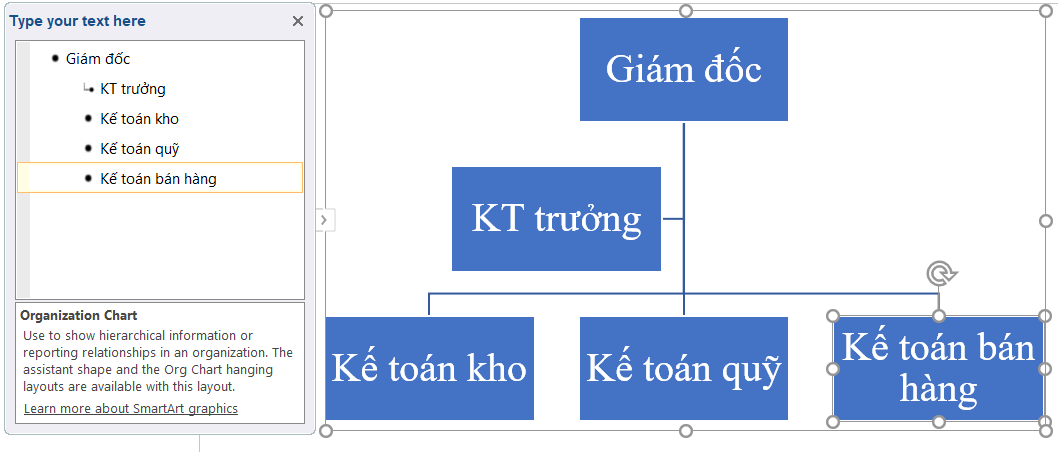
Click directly into a box to type text, or use the Text Pane (which usually appears to the left of the graphic) for a faster data entry experience. The Text Pane acts as a bulleted list where indentation levels correspond to the hierarchy levels in the chart.
Typical entries include the person’s name followed by their job title. Using Shift + Enter allows you to break lines within a box, keeping the name on the first line and the title on the second for a cleaner look.
Entering text content into the organizational chart hierarchy boxes
Step 4: Expanding the Structure
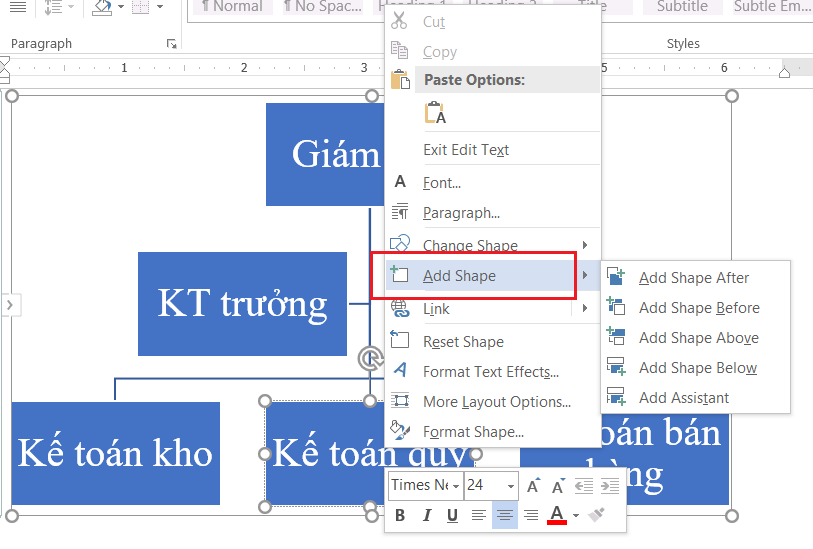
Real-world organizations are rarely as simple as the default template. You will likely need to add more boxes. To do this, select a box (node) that you want to branch out from. Right-click the box, select Add Shape, and choose the appropriate relationship from the context menu. Understanding these options is crucial for accuracy:
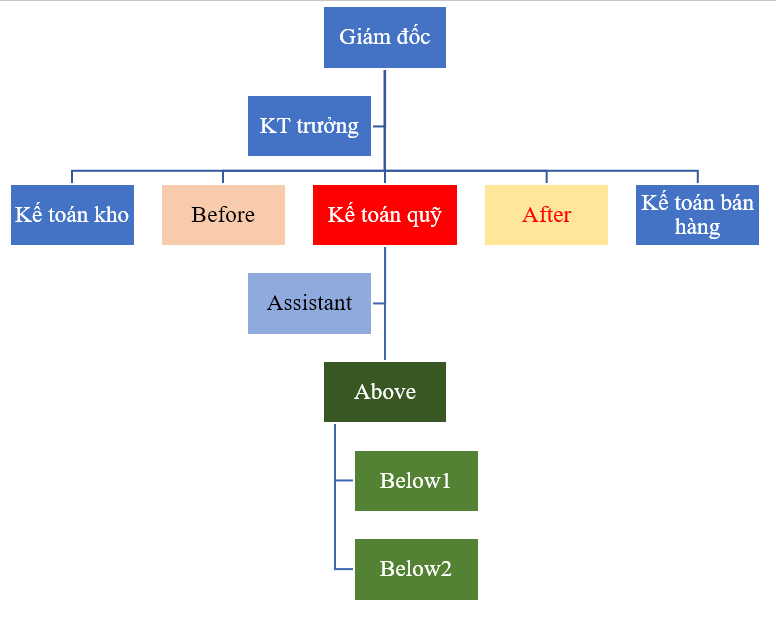
- Add Shape After: Inserts a new box at the same level, to the right of the selected box (a colleague/peer).
- Add Shape Before: Inserts a new box at the same level, to the left (a colleague/peer).
- Add Shape Above: Inserts a new box one level up (a manager).
- Add Shape Below: Inserts a new box one level down (a direct report/subordinate).
- Add Assistant: Creates a special box connected by an elbow line, typically used for administrative assistants or roles that support a manager but do not have direct reports in the main chain of command.
Context menu showing Add Shape options like After, Before, and Below
By mastering these five options, you can construct complex hierarchies that accurately reflect matrix structures or multi-departmental organizations without manually drawing connector lines.
Visual representation of different shape additions in the chart
Step 5: Advanced Visual Customization
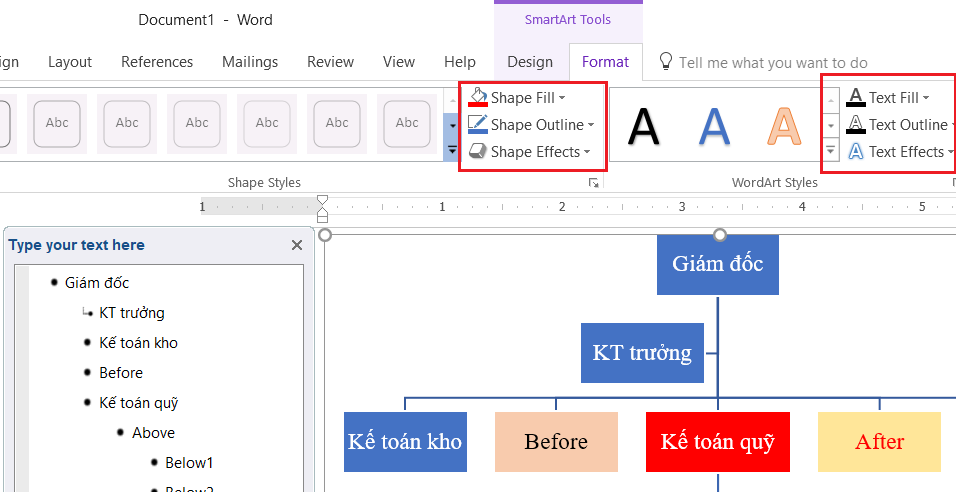
To give your chart a final professional polish, utilize the SmartArt Tools tabs: Design and Format. While the Design tab handles overall layouts and color themes, the Format tab allows for granular control over individual shapes.
In the Format tab, you can modify:
- Shape Fill: Change the background color of specific boxes (e.g., color-coding the IT department blue and HR red).
- Shape Outline: Adjust the border thickness or style.
- Shape Effects: Add shadows, glow, or bevels for a 3D look.
- Text Effects: Apply WordArt styles to the text within the shapes.
The SmartArt Tools Format tab showing fill and outline options
Conclusion
Using SmartArt in Microsoft Word transforms the tedious task of creating organizational charts into a quick, automated process. By leveraging the Hierarchy tools, you can produce clear, professional, and easily editable diagrams that effectively communicate organizational structure. Whether you are mapping out a small team or a large corporation, these tools ensure your documentation remains precise and visually appealing.
References
- Microsoft Support. (n.d.). Create an organization chart. Retrieved from Microsoft.com
- GCFGlobal. (n.d.). Word: Working with SmartArt Graphics. Retrieved from GCFGlobal.org
- TechRepublic. (2024). How to use Microsoft Word’s SmartArt to visualize processes.


Discussion about this post