


Khi lập hóa đơn Giá Trị Gia Tăng (GTGT) hay còn gọi là hóa đơn đỏ, hóa đơn VAT, một lỗi thường gặp khiến nhiều người đau đầu là số tiền hàng bị lẻ dẫn đến số tiền thuế cũng lẻ. Điều này gây ra sự chênh lệch khi cộng tổng tiền do việc làm tròn số tự động. Vậy làm thế nào để khắc phục tình trạng này? Bài viết này sẽ hướng dẫn bạn cách làm tròn số tiền trên hóa đơn GTGT chính xác nhất.
Những Điểm Cần Lưu Ý Khi Lập Hóa Đơn GTGT
Dù là hóa đơn giấy hay hóa đơn điện tử, hóa đơn GTGT đều phải chính xác, không được sai sót. Bởi nếu sai, bạn không thể sửa trực tiếp mà phải làm thủ tục điều chỉnh. Vì vậy, sự cẩn thận và tỉ mỉ là nguyên tắc hàng đầu cho mọi kế toán. Dưới đây là một số lưu ý quan trọng:
- Thời điểm lập hóa đơn: Hóa đơn phải được lập theo trình tự thời gian tăng dần, liên tục. Việc này được kiểm soát qua báo cáo tình hình sử dụng hóa đơn và số hóa đơn được kê khai hàng kỳ (tháng, quý). Thời điểm ghi nhận doanh thu theo hợp đồng cũng ảnh hưởng đến việc lập hóa đơn.
- Thông tin khách hàng: Kế toán phải ghi đúng và đầy đủ thông tin khách hàng. Nếu là cá nhân, ghi vào mục “Tên khách hàng/Tên người mua hàng”. Nếu là tổ chức, doanh nghiệp, ghi vào mục “Tên đơn vị”. Địa chỉ khách hàng cần chi tiết, bao gồm số nhà, phường/xã, quận/huyện, tỉnh/thành phố.
- Số tiền: Đây là phần quan trọng nhất. Khi bán hàng hóa, cần ghi rõ đơn vị tính, số lượng, đơn giá và thành tiền. Lưu ý khi tính thuế cần đảm bảo làm tròn đúng quy định. Đối với một số dịch vụ hoặc hàng hóa đã bao gồm thuế với số tiền tròn, việc tính ngược lại số tiền trước thuế và tiền thuế nếu làm tròn không chính xác sẽ dẫn đến sai lệch so với ban đầu.
Để lập hóa đơn GTGT chính xác, hạn chế sai sót, chúng ta cần nắm vững cách làm tròn số. Nên lập hóa đơn nháp trước và tính toán trên Excel, kết hợp các hàm làm tròn số để có kết quả chính xác.
Phương Pháp Làm Tròn Số Tiền Trên Hóa Đơn GTGT
Có hai dạng làm tròn số tiền trên hóa đơn GTGT:
- Tính xuôi: Tính tuần tự từ Số lượng Đơn giá = Thành tiền. Từ tổng tiền tính ra Số thuế GTGT = Thành tiền Thuế suất. Tiền sau thuế = Thành tiền + Tiền thuế GTGT. Việc làm tròn số chỉ ảnh hưởng khi tính số tiền thuế.
- Tính ngược: Biết trước số tiền sau thuế, từ đó tính ngược lại số tiền trước thuế và số tiền thuế phải nộp. Dạng này thường gặp với dịch vụ hoặc hàng hóa có giá bán cố định trên hợp đồng. Số lượng bán thường là 1 và đơn giá chính là số tiền trước thuế. Dạng này phải làm tròn theo phương pháp bù trừ giữa tiền trước thuế và tiền thuế.
Hãy xem các ví dụ sau để hiểu rõ hơn về hai cách làm tròn này.
Làm Tròn Số Tiền Theo Cách Tính Xuôi
Ví dụ:
Hóa đơn có thông tin như sau:
- Mặt hàng 1: Số lượng 23, đơn giá 45.532
- Mặt hàng 2: Số lượng 6, đơn giá 21.350
- Thuế suất GTGT 10%
Tính tổng tiền của hóa đơn.
Cách làm:
Dựa trên thông tin trên, ta có thể xây dựng bảng tính Excel như sau:
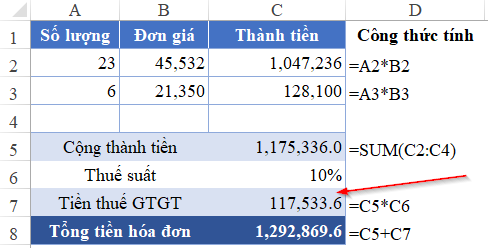
Nếu không sử dụng hàm làm tròn số, phần tiền thuế GTGT sẽ có số lẻ là 117.533,6.
Trong trường hợp này, phải làm tròn số tiền thuế. Công thức tại ô C7 là =C5*C6. Sử dụng hàm ROUND để làm tròn hết phần thập phân: =ROUND(C5*C6,0).
Kết quả sau khi làm tròn:
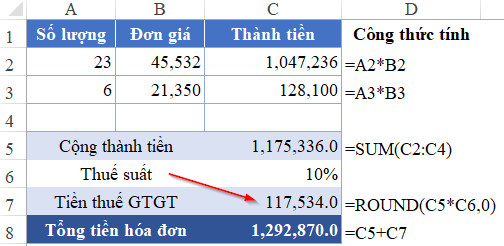
Kết quả tại ô C8 đã chính xác, tuân thủ nguyên tắc số tiền không được có số lẻ.

Làm Tròn Số Tiền Theo Cách Tính Ngược
Ví dụ:
Hóa đơn có thông tin như sau:
- Chỉ có 1 mặt hàng. Tổng số tiền thanh toán là 23.150.000 đồng (đã bao gồm thuế).
- Thuế suất GTGT 10%
Tính số tiền trước thuế và số tiền thuế.
Cách làm:
Biểu diễn trên Excel:
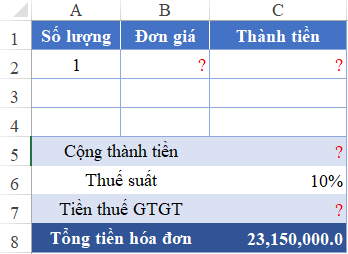
Giả sử đơn giá là DG. Ta có:
- Thành tiền = 1 * DG = DG
- Cộng thành tiền = DG
- Tiền thuế GTGT = DG * 10%
- Tổng tiền hóa đơn = DG + DG 10% = 23.150.000 = DG (1 + 10%) = DG * 1.1
Vậy: DG = 23.150.000 / 1.1, tương đương với C5 = C8 / 1.1
Kết quả:
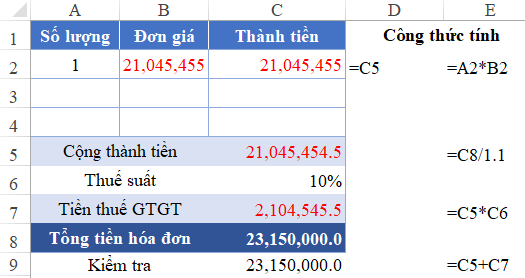
Cả ô C5 và C7 đều có phần thập phân. Nếu làm tròn bằng hàm ROUND như cách tính xuôi:
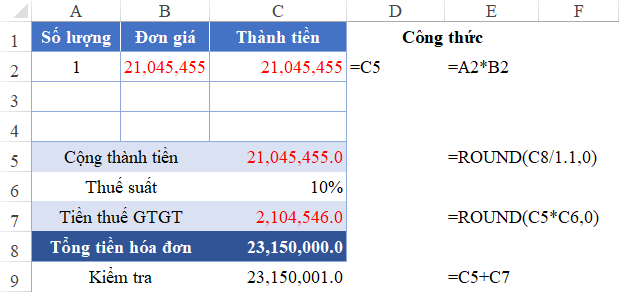
Kết quả sai lệch 1 đồng. Đây là lỗi thường gặp do làm tròn lên ở cả hai ô C5 và C7 (0.5 được làm tròn lên 1).
Cách khắc phục:
Chỉ làm tròn ở một vị trí, cụ thể là vị trí được tính ra trước (ô C5). Vị trí còn lại tính bằng cách lấy Tổng tiền – Số đã tính được.
- Làm tròn ô C5 với hàm
ROUND. - Ô C7 = C8 – C5
Kết quả:
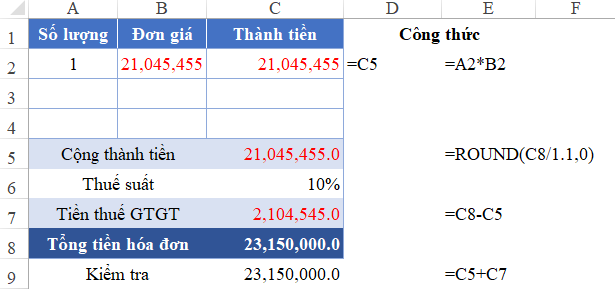
Đây là cách tính bù trừ. Khi hai số cộng lại thành một kết quả, nếu một số đã được làm tròn lên thì số còn lại phải làm tròn xuống.
Kết Luận
Việc làm tròn số tiền trên hóa đơn GTGT đòi hỏi sự chính xác và tỉ mỉ. Bài viết đã hướng dẫn hai phương pháp làm tròn: tính xuôi và tính ngược, cùng với cách khắc phục lỗi thường gặp khi làm tròn số tiền thuế. Hy vọng những thông tin này sẽ giúp bạn lập hóa đơn GTGT chính xác và hiệu quả. Bạn có thể tìm hiểu thêm về các hàm làm tròn số trong Excel và nguyên tắc làm tròn số để nâng cao kiến thức kế toán của mình.












Discussion about this post