
In the professional world, securing your data and defining document ownership is paramount. Whether you need to mark a financial report as “CONFIDENTIAL,” designate a price list as a “DRAFT,” or simply brand a spreadsheet with your company logo, a watermark is the standard solution. While Microsoft Word offers a dedicated button for this feature, Microsoft Excel requires a slightly more technical approach.
This guide will walk you through the professional method of inserting, customizing, and managing watermarks in Microsoft Excel. We will utilize the Header & Footer capabilities to create a persistent background image that appears on every printed page, a technique compatible with Excel 2010, 2013, 2016, and Office 365.
Phase 1: Designing the Watermark Image
Before diving into Excel’s layout settings, you must have the image file ready. Unlike Word, Excel does not generate text watermarks on the fly; you must insert an image. You can design this using professional software like Photoshop, or simply create one within Excel itself using WordArt and Microsoft Paint.
If you choose to create a quick text-based watermark using Excel’s internal tools, start by opening a blank spreadsheet. Navigate to the Insert tab on the Ribbon, locate the Text group, and select WordArt. Choose a style that suits your needs—usually, a simple, bold font works best for watermarks. Type your desired text, such as “INTERNAL USE ONLY” or “SAMPLE.”
Creating a text-based watermark using WordArt in Excel
Once your text is generated, you may want to clean up the visual environment to focus on your design. Go to the View tab and uncheck Gridlines to remove the cell borders from your view. This makes it easier to take a clean screenshot or copy the element.
Select your WordArt object, right-click, and choose Copy. Open a basic image editor like Microsoft Paint, paste the object, and use the Crop tool to remove any excess white space around the text. Save this file as a PNG or JPG to your computer. This file will serve as your master watermark image.
Animated demonstration of the watermark creation process
With your source image ready, we can now proceed to the structural changes in your Excel workbook. The following steps involve accessing the backend layout of the spreadsheet to embed this image.
Animation showing the transition to the header insertion method
Phase 2: Inserting the Watermark via Header & Footer
The most reliable way to display a watermark in Excel is by placing it in the Header. Content in the Header automatically repeats on every printed page, simulating a true watermark effect. Standard insertion methods (like “Insert Picture”) will only place the image on top of the cells, obstructing your data.
To begin, ensure your target spreadsheet is open. Navigate to the Insert tab on the main Ribbon. In the Text group (often located towards the right side of the toolbar), click on Header & Footer.
Accessing the Header & Footer tools via the Insert tab
Clicking this button triggers a view change. Excel will switch from “Normal” view to “Page Layout” view. You will see your worksheet divided into pages, and a space for the Header will appear at the top. Simultaneously, a new contextual tab named HEADER & FOOTER TOOLS (DESIGN) will appear on the Ribbon.
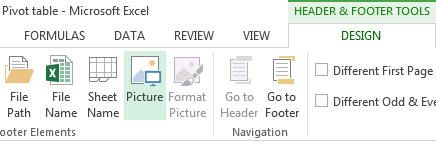
Click inside the center section of the Header area to ensure your watermark will be horizontally centered. On the Design tab, locate the Header & Footer Elements group and click on the Picture icon.
Selecting the Picture element to insert an image into the header
A dialog box named Insert Pictures will appear. You will have the option to upload a file from your computer, search Bing Images, or use OneDrive. Since you created and saved your image in the previous step, choose the option to browse from a file.
Navigate to the location where you saved your PNG or JPG file, select it, and click Insert.
Browsing local files to select the prepared watermark image
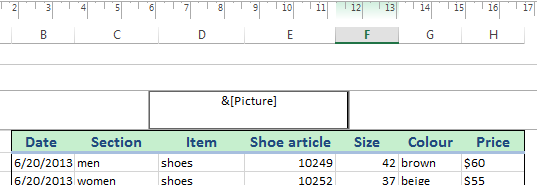
After inserting the file, do not be alarmed if you do not see the image immediately. Instead, you will see a text code that looks like &[Picture] in the header box. This is Excel’s standard placeholder code indicating that an image object is anchored to this header section.
The placeholder code indicating an image has been inserted
To render the image and check how it looks, simply click any cell outside the Header area (click anywhere in the main data grid). The view will refresh, and your watermark should now appear behind your data.
Previewing the watermark in Page Layout view
Important Note: Watermarks inserted this way are only visible in Page Layout view and Print Preview. If you switch back to Normal view, the watermark will disappear from the screen, although it is still technically part of the file.
Phase 3: Formatting and Positioning
Rarely does a watermark fit perfectly on the first try. It might be too dark, interfering with data readability, or it might be sitting too high up on the page. We need to fine-tune it using the Format Picture tools.
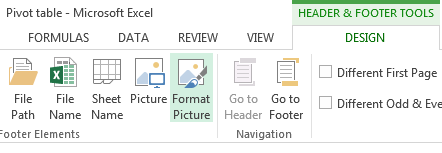
To adjust the settings, click back into the Header section where the &[Picture] text is located. On the Design tab, click on Format Picture. This button is usually located right next to the “Picture” button you used earlier.
Accessing the Format Picture settings
Adjusting Size and Scale
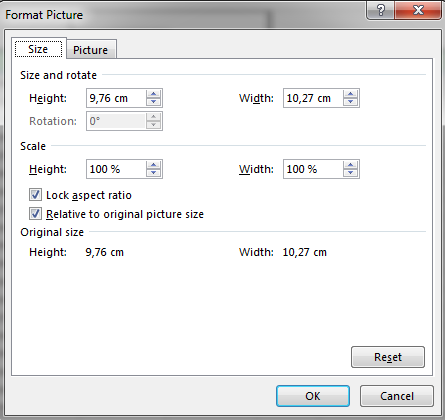
If your original image was too large or too small, the Size tab in the Format Picture dialog box is where you correct it. You can adjust the height and width by specific inches or use the scaling percentage. Ensure the “Lock aspect ratio” box is checked to prevent your logo or text from becoming distorted.
Adjusting the dimensions of the watermark image
Applying the Washout Effect
The most critical step for a professional look is ensuring the watermark does not overpower the spreadsheet data. A dark, bold watermark makes the numbers hard to read.
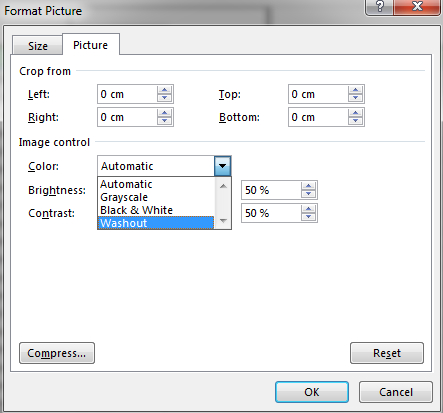
Switch to the Picture tab within the Format Picture dialog. Under the Image Control section, locate the Color dropdown menu. Select Washout. This setting automatically adjusts the brightness and contrast to fade the image significantly, creating that subtle, professional background look.
Applying the Washout effect to fade the watermark
Centering the Watermark
By default, the image sits at the very top of the header. To move it to the middle of the page:
- Click inside the Header section in front of the
&[Picture]text. - Press the Enter key multiple times.
- Click out of the header to check the position.
- Repeat until the image is vertically centered on your printed page.
Removing the Watermark
If the document status changes and you no longer need the watermark, removing it is straightforward.
- Open the spreadsheet and ensure you are in Page Layout view.
- Click into the Header area containing the watermark.
- Highlight the
&[Picture]text. - Press Delete or Backspace.
- Click any cell outside the header to confirm the changes.
Conclusion
Mastering the Header & Footer tools in Excel allows you to produce documents that meet high corporate standards. By following this guide, you can ensure your intellectual property is protected and your document status is clearly communicated, all without compromising the readability of your data. While Excel may not make it as “one-click” simple as Word, the level of control you have over positioning and transparency ensures a superior result for printed reports and PDFs.
We encourage you to experiment with different image opacities and positions to find the template that best fits your organization’s style. If you found this tutorial helpful, share it with your colleagues to help them boost their Excel productivity.


Discussion about this post